Manufacturing Processes of Tungsten Carbide Rods: From Powder to Product
Table of contents:
The Powder Metallurgy Process in Tungsten Carbide Rod Production
Quality Control Measures in Manufacturing Tungsten Carbide Rods
Customization Options: Tailoring Tungsten Carbide Rods to Specific Applications
Sustainability Practices in Tungsten Carbide Rod Manufacturing
The Powder Metallurgy Process in Tungsten Carbide Rod Production
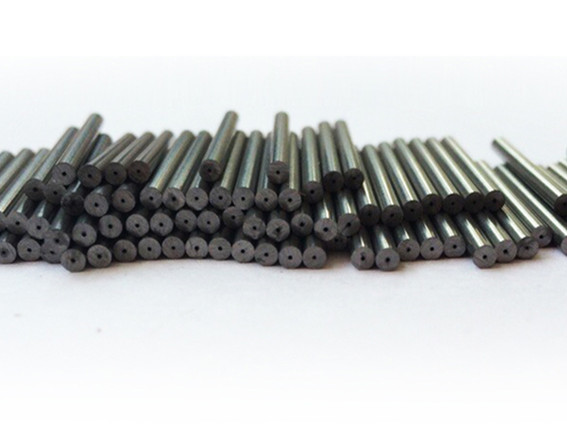
The manufacturing of tungsten carbide rods starts with powder metallurgy. This process involves combining tungsten carbide powder with certain metallic binders, usually cobalt, to create a composite material. These raw powders are first weighed and measured carefully before being blended to achieve a precise chemical composition. The mixture is milled extensively to ensure the particles are evenly distributed, which improves the strength and uniformity of the final product. Following this, a pressing process forms the powder into compacted rod-shaped blanks under extremely high pressure. Sintering then takes place, where these blanks are heated in a controlled furnace to temperatures above 1,300°C. This process fuses the tungsten carbide and binder material, creating a dense and solid material while enhancing its overall mechanical properties.
Quality Control Measures in Manufacturing Tungsten Carbide Rods
Quality control is vital during every step of tungsten carbide rod production to meet industry standards and customer requirements. Rigorous inspections are conducted to check the purity and particle size of the original powders since these directly affect the performance of the final product. During the sintering process, controls are applied to monitor the temperature, pressure, and time, ensuring consistency across every batch. After sintering, the rods are tested for hardness, density, and toughness to verify they meet required specifications. Advanced technologies like ultrasonic flaw detectors and X-ray diffraction systems are also used to spot internal defects that the naked eye cannot detect. The rods undergo surface grinding during the final phase to achieve an exact diameter and surface finish, critical for applications demanding high precision. Special care is taken to document every quality check, offering customers full traceability for the rods they purchase.
Customization Options: Tailoring Tungsten Carbide Rods to Specific Applications
Tungsten carbide rods are highly versatile and can be tailored to fit unique industry needs. Manufacturers offer customization in terms of dimensions, lengths, and diameters, which helps them cater to varying industrial applications. For instance, the rods can be shaped and ground to suit end mills, drill bits, or cutting tools used in complex machining jobs. Aside from size, specific formulations are developed by adjusting the amount of cobalt or other binders added to the mixture. A higher binder content offers greater toughness, ideal for the mining sector, while lower binder content results in harder and more wear-resistant rods best suited for aerospace components. Coating technologies further enhance these rods by adding layers like titanium carbide or titanium nitride to improve performance in corrosive or high-temperature environments. The ability to engineer rods with such unique properties ensures that clients receive exactly what they need, whether it’s for high-speed drilling or intricate aerospace manufacturing projects.
Sustainability Practices in Tungsten Carbide Rod Manufacturing
The rising importance of environmentally friendly practices has not gone unnoticed in the production of tungsten carbide rods. Recycling plays a significant role in reducing reliance on virgin raw materials. Manufacturers often collect worn-out tungsten carbide tools from their clients, extract tungsten and cobalt from them using chemical processes, and reuse these metals in new rod production. Advances in energy efficiency have also resulted in modern sintering furnaces that consume less energy than older models, significantly cutting down on carbon emissions. Water used during grinding processes is now frequently filtered and recycled, lowering operational waste and limiting environmental impact. Some producers also seek certification from environmental authorities to ensure their production chains follow international sustainability standards. With these measures, the production of tungsten carbide rods is not only technologically advanced but also increasingly aligned with global efforts toward sustainability.
Tungsten carbide rods are indispensable in numerous industries and applications. From precision machining tools to mining operations, these rods' unique properties make them a constant in heavily demanding environments. Understanding their manufacturing process—from powder to product—not only highlights the complexity involved but also sheds light on how quality and customization ensure their relevance across industries. If you're sourcing high-quality tungsten carbide rods or titanium carbide rods for your projects, considering their production methods can help you make an informed choice.